See how we work from start to finish
Source system
SEDS is source-independent and therefore highly flexible
The primary energy source can vary widely, ranging from a geothermal installation (BHE field or ATES) to air‑to‑water heat pumps and even hydrogen systems. SEDS can also be connected seamlessly to existing or new district heating networks.
Geothermal energy
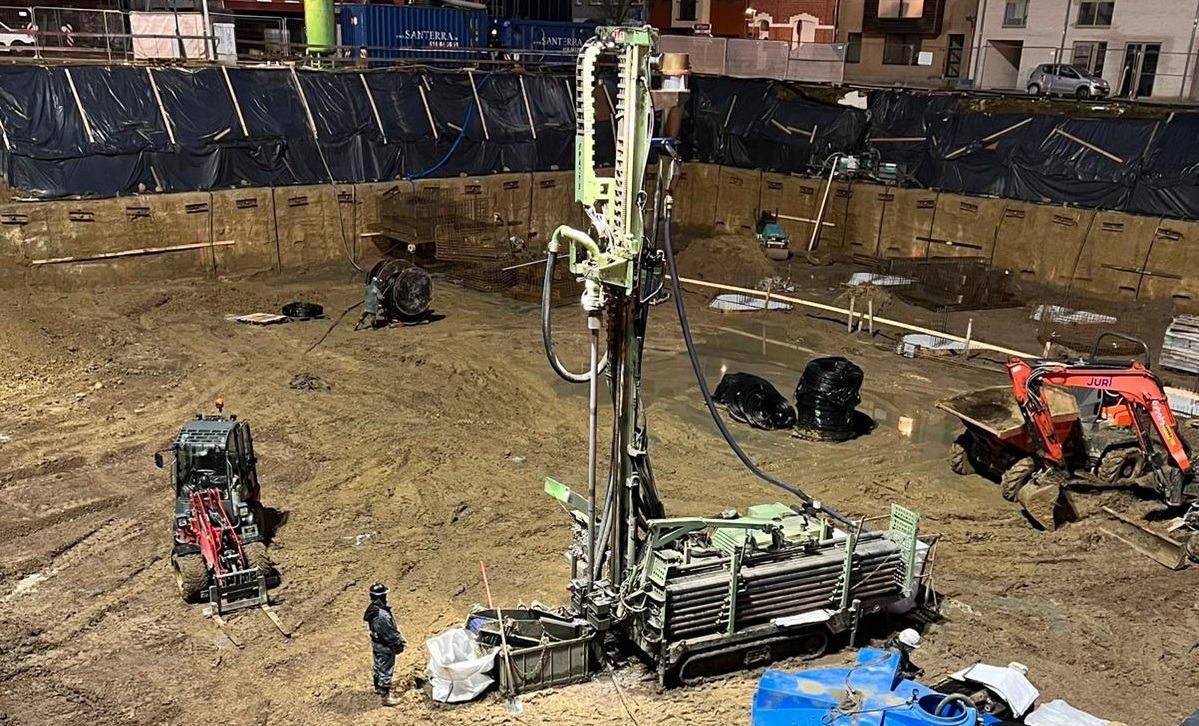
SEDS installations are most often built with geothermal energy
Energy extracted from the ground via a BHE field or ATES not only provides central heating and domestic hot water, but also makes it possible to cool the building passively in summer.



Technical room
The central technical room is the heart of the SEDS installation
SEDS always uses modulating heat pumps
These units extract energy from the ground or from the air and convert it into usable energy, which can then be used by the SEDS units to produce domestic hot water and heating.
A heat exchanger provides comfortable summer temperatures
In a geothermal system, the heat exchanger takes care of passive cooling. It ensures that the heat extracted from the building can be stored in the ground. This stored heat can then be used again in winter for heating and domestic hot water production.
Distribution of heating and cooling via a manifold
The manifold distributes the extracted heat or cooling to the apartment buildings. SEDS uses 2‑pipe or 3‑pipe distribution. In a 2‑pipe configuration, the circuits are defined according to the orientation of the apartments. In a 3‑pipe configuration, a separate hot and cold distribution loop is used.
Faultless operation of the heating system via the HVAC electrical panel
This panel controls, protects and supplies all HVAC components, such as heat pumps, pumps, valves and controls. It is connected to the main low‑voltage switchboard (MLVS) and the building management systems.
The MLVS connects all technologies
The MLVS (main low‑voltage switchboard) provides the electrical supply and protection for the installations in the technical room: it powers the entire technical installation, as well as the PV installation and any charging infrastructure.

Distribution network
The distribution network delivers the required energy, heating or cooling, to the SEDS unit
The heated water supplied by the central heat pumps flows through the distribution network to the SEDS unit and, after transferring its energy to the underfloor heating or to the domestic hot water, returns to the heat pump. In summer, the distribution temperature is around 17°C, enabling passive cooling.
Nice to know
Distribution takes place at a maximum of 35°C, which keeps energy losses to an absolute minimum.
By using high‑quality materials and fully designing the routing in the engineering phase, SEDS ensures minimal pressure losses and therefore high efficiencies. In addition, we keep air out of the system, which not only increases efficiency but also results in lower maintenance costs. A win‑win‑win‑win, in other words.



SEDS unit
Every apartment is equipped with a SEDS unit
The SEDS unit is a crucial part of the installation. This unit distributes the centrally generated heating or cooling to the apartment and produces domestic hot water.
Underfloor heating and cooling provide excellent comfort all year round
The SEDS unit is equipped with manifolds to which the underfloor heating circuits can be connected. Because part of the SEDS unit is installed right after the structural shell is completed, the underfloor heating can already be used for screed drying and to keep the building frost‑free.
Unlimited domestic hot water comfort
Through an integrated plate heat exchanger and a buffer tank heated by a booster heat pump, SEDS ensures very high domestic hot water comfort. Thanks to our patented layout of the plate heat exchanger, our system is also completely safe with regard to Legionella.
Advanced control so residents can enjoy with complete peace of mind
The SEDS unit is constantly connected to the central technical room. On the one hand this makes it very easy to anticipate the building’s varying energy demand, and on the other hand it allows the system to be monitored continuously. SEDS will often detect an issue before the resident even notices it.

Underfloor heating
The SEDS unit as central connection point
Each heating circuit consists of a supply and return line that come together at a manifold. This manifold is integrated into the SEDS unit. Using an injection control system with integrated pump and analogue control valve, SEDS ensures an optimal distribution temperature with coverage right up to the furthest corner of the apartment.
Comfort in every room
As standard, the system is supplied with a central controller in the living room. Optionally, separate room‑by‑room control can be provided to “throttle” the heat or cooling. For example, the bedroom temperature can be limited to 18°C in winter, resulting in better sleeping comfort.



PV installation
Solar panels underline the sustainable nature of SEDS
SEDS installs PV panels that are connected to the entire technical installation. This allows both the heat pumps and the charging infrastructure to use solar energy.
A SEDS system is always in balance
By making smart use of solar energy, dynamic energy tariffs and the large thermal storage capacity of the SEDS units, SEDS keeps the grid consumption as balanced as possible. No unnecessary peaks, no major imbalances.

Charging facilities
SEDS provides the charging infrastructure
These preparatory works include determining and installing the cable routes, providing the necessary penetrations, empty ducts and fixings, installing the required circuit breakers and residual‑current devices, and complying with the applicable electrical standards and fire safety regulations within the apartment building.
The developer or HOA chooses the preferred system
Once the basic infrastructure has been installed, the further choice lies with the project developer or the homeowners’ association (HOA). They decide which type of charging station is installed, which functionalities (such as load balancing, smart control or access control) are required, and which subcontractor will carry out the actual installation and connection of the charging stations.